
Trauma and PTSD: Symptoms That Can Show Up Later
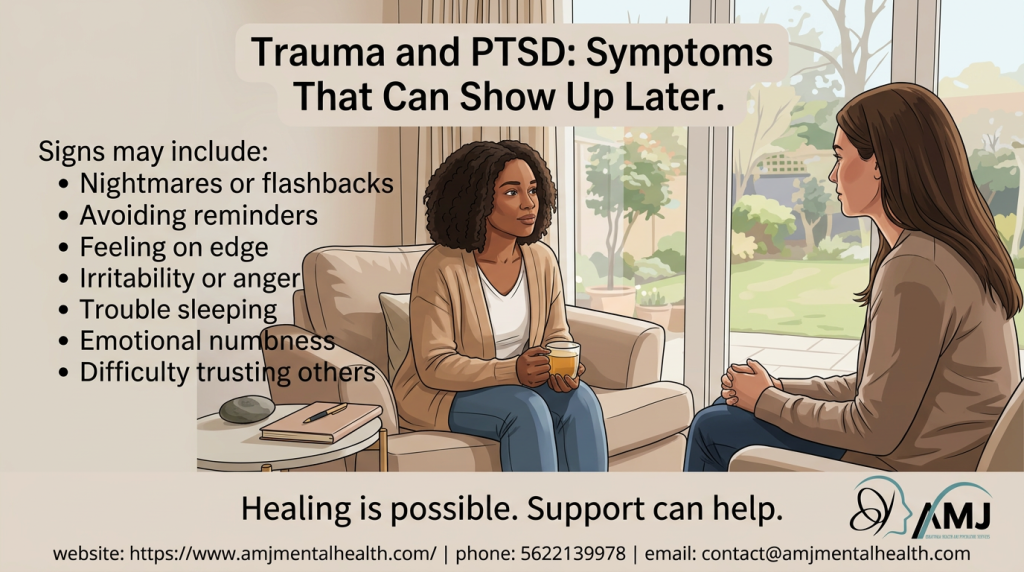
Delayed PTSD After Trauma
Trauma can lead to post-traumatic stress disorder, or PTSD. For some people, symptoms start soon after the trauma. For others, symptoms may not fully appear until months or even years later.
The DSM-5 uses the term **“delayed expression”** when full PTSD symptoms begin **6 months or more** after the trauma.
A person may seem okay at first but still have early symptoms, such as:
* Unwanted memories or intrusive thoughts
* Avoiding people, places, or reminders
* Trouble sleeping
* Irritability or anger
* Feeling on edge or easily startled
These symptoms may slowly become stronger over time. Research suggests that delayed PTSD is more common in people exposed to repeated or work-related trauma, including military personnel, first responders, and others in high-stress roles.
Ongoing stress, repeated trauma, and mild traumatic brain injury may make symptoms worse or harder to recognize early.
Signs of PTSD can include:
* Nightmares or flashbacks
* Avoiding reminders of the trauma
* Feeling guilt, sadness, fear, or numbness
* Trouble relaxing or sleeping
* Anger, irritability, or being easily startled
Delayed PTSD can happen even when a person had few or no symptoms at first. Anyone who notices trauma-related symptoms later should seek support from a licensed mental health professional.
