
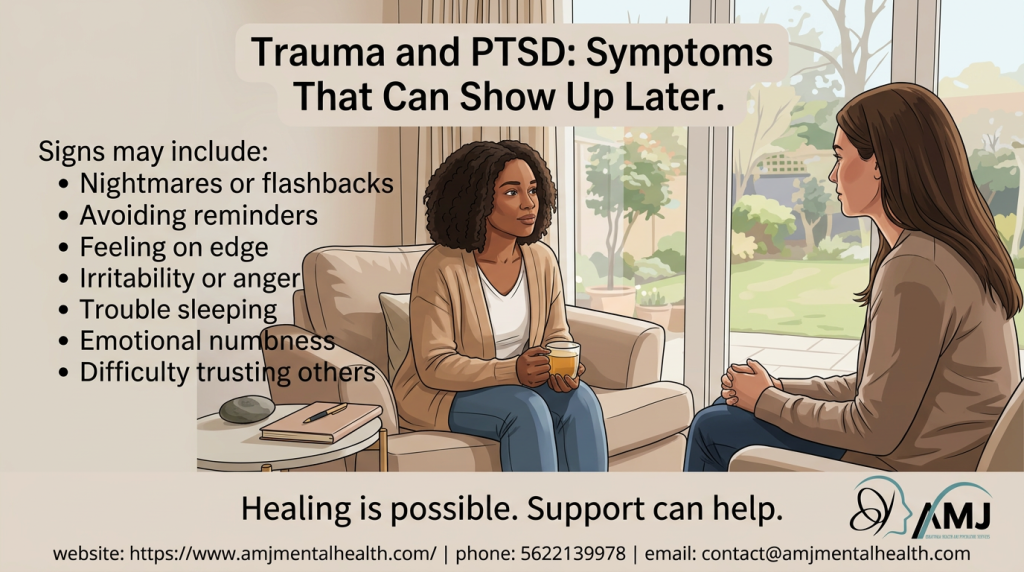
Trauma and PTSD: Symptoms That Can Show Up Later
Delayed PTSD After Trauma
Trauma can lead to post-traumatic stress disorder, or PTSD. For some people, symptoms start soon after the trauma. For others, symptoms may not fully appear until months or even years later.
The DSM-5 uses the term **“delayed expression”** when full PTSD symptoms begin **6 months or more** after the trauma.
A person may seem okay at first but still have early symptoms, such as:
* Unwanted memories or intrusive thoughts
* Avoiding people, places, or reminders
* Trouble sleeping
* Irritability or anger
* Feeling on edge or easily startled
These symptoms may slowly become stronger over time. Research suggests that delayed PTSD is more common in people exposed to repeated or work-related trauma, including military personnel, first responders, and others in high-stress roles.
Ongoing stress, repeated trauma, and mild traumatic brain injury may make symptoms worse or harder to recognize early.
Signs of PTSD can include:
* Nightmares or flashbacks
* Avoiding reminders of the trauma
* Feeling guilt, sadness, fear, or numbness
* Trouble relaxing or sleeping
* Anger, irritability, or being easily startled
Delayed PTSD can happen even when a person had few or no symptoms at first. Anyone who notices trauma-related symptoms later should seek support from a licensed mental health professional.
Trauma and PTSD: Symptoms That Can Show Up Later
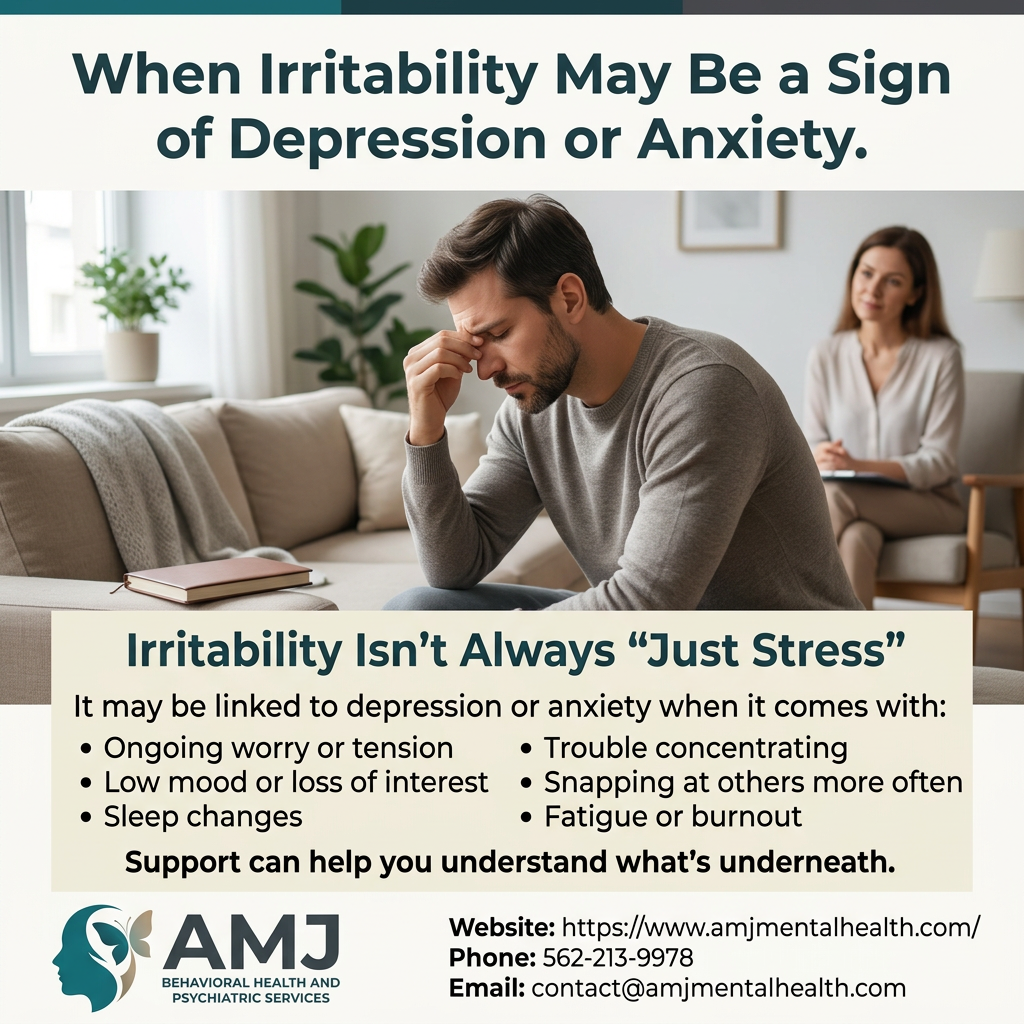
When Irritability May Be a Sign of Depression or Anxiety
A psychiatric evaluation is often the first step when emotional, behavioral, or mental health symptoms impact daily life. It is not limited to severe mental illness and can address concerns such as anxiety, depression, mood swings, stress, sleep issues, trauma symptoms, difficulty focusing, substance use, and challenges in relationships, school, or work.
During a psychiatric evaluation, a mental health professional reviews your symptoms, personal history, medical background, and daily functioning. This process helps identify concerns, clarify your experiences, and determine appropriate support. In some cases, it can also rule out medical conditions that may contribute to emotional or behavioral changes.
Consider a psychiatric evaluation if you feel persistently sad, anxious, hopeless, overwhelmed, unusually energetic, irritable, or unable to function as usual. It is also recommended that others have noticed significant changes in your mood, behavior, or thinking.
A psychiatric evaluation can provide early support and a treatment plan tailored to your needs. This may include therapy, coping strategies, lifestyle changes, further medical assessment, psychiatric assessment, or psychiatric medication. If you have thoughts of self-harm, suicide, or harming others, seek immediate in-person help.
When Irritability May Be a Sign of Depression or Anxiety

Your Mind Matters: Why a Psychiatric Evaluation Can Help
A psychiatric evaluation is often the first step when emotional, behavioral, or mental health symptoms impact daily life. It is not limited to severe mental illness and can address concerns such as anxiety, depression, mood swings, stress, sleep issues, trauma symptoms, difficulty focusing, substance use, and challenges in relationships, school, or work.
During a psychiatric evaluation, a mental health professional reviews your symptoms, personal history, medical background, and daily functioning. This process helps identify concerns, clarify your experiences, and determine appropriate support. In some cases, it can also rule out medical conditions that may contribute to emotional or behavioral changes.
Consider a psychiatric evaluation if you feel persistently sad, anxious, hopeless, overwhelmed, unusually energetic, irritable, or unable to function as usual. It is also recommended that others have noticed significant changes in your mood, behavior, or thinking.
A psychiatric evaluation can provide early support and a treatment plan tailored to your needs. This may include therapy, coping strategies, lifestyle changes, further medical assessment, psychiatric assessment, or psychiatric medication. If you have thoughts of self-harm, suicide, or harming others, seek immediate in-person help.
Your Mind Matters: Why a Psychiatric Evaluation Can Help

ADHD Isn’t Just “Being Distracted”: Signs, Support, and Treatment That Help
ADHD affects both children and adults and involves more than difficulty paying attention. Symptoms may include distractibility, restlessness, impulsivity, poor time management, forgetfulness, or feeling overwhelmed by daily tasks. Many individuals struggle for years without realizing there is a medical explanation.
ADHD is treatable. A thorough evaluation can determine whether symptoms are due to ADHD, anxiety, depression, sleep issues, trauma, or another condition. Treatment options include therapy, coping strategies, accommodations at school or work, and, when appropriate, medication.
If you or your child struggles with focus, organization, follow-through, or emotional regulation, an assessment can clarify the cause and identify effective support. Early diagnosis and treatment can enhance daily functioning, confidence, and quality of life.
ADHD Isn’t Just “Being Distracted”: Signs, Support, and Treatment That Help

Hello world!
quos dolores et quas molestias excepturi sint occaecati cupiditate non provident, similique sunt in culpa qui officia deserunt mollitia animi, id est laborum et dolorum fuga. Et harum quidem rerum facilis est et expedita distinctio. Nam libero tempore, cum soluta nobis est eligendi optio
